Last updated March 27, 2026
Disclosure: This site participates in affiliate programs. If you click certain links and make a purchase, we may earn a small commission at no additional cost to you.
Manhattan Night Court: Opening Statement
It’s just after 6:00 p.m. when I rush into 100 Centre Street, relieved to leave a moody Monday’s rain behind. After a brief security screening, an officer directs me to courtroom #130.
Night court usually take up two courtrooms, but tonight there is only one in session. I pass through two sets of swinging double doors and lay my wet belongings down in the second row. I’m close to the action, my favorite pen ready to fire ink.
Then I remember… it’s night court. The tempo here is more adagio than andante. Unhurried. Deliberate. Methodical. Qualities the night magnifies. It’s going to be a while.
Quick Info
Location: 100 Centre Street, Manhattan
Hours: Monday–Friday, 5:30 PM – 1:00 AM
Cost: Free
Subway
Brooklyn Bridge–City Hall (4,5,6)
Chambers St (J,Z)
Canal St (N,R,Q,W,6)
Franklin St (1)
What Is Night Court?
When someone is arrested in Manhattan, they must appear before a judge at what’s called an arraignment hearing. Night court is a series of arraignment hearings for people who have been recently arrested. Procedurally, courts are the same whether it’s day or night. The vibe after dark, however, is a little looser, more matter-of-fact.
Night court somehow just feels more New York than the daytime sessions. It’s not stretched-out-on-a-jazz-club-sofa relaxed, but you could argue a case for calling it easygoing. Only in New York City does sitting in a courtroom at a quarter to one in the morning feel completely normal.
Despite its calm facade at the start, the legal machinery’s engine is whirring. As it warms up, my eyes tour the room, stopping at points of interest.

The Gang’s All Here
A rocker-chick public defender with spiky hair and cool clothes chit-chats with a prosecutor. The judge laughs at a story told by a court officer with a thick Brooklyn accent. Some clerks zig, some clerks zag, while others make and receive landline phone calls that mix business with personal anecdotes.
A blue-suited detective jokes with his orange-suited prisoner. Public defenders consult in far corners with defendants they met minutes ago. An interpreter of an obscure tribal African language patiently waits to be of service. The stenographer’s manicured lavender nails faintly click-clack against her machine’s keys. Besides myself, there were only a couple of other observers that night… until…
They Left Too Soon
About two hours into the session, I was taking minor notes on a minor case when they entered. A family of five tall German tourists: Vater, Mutter, und their three adolescent Kinder. A Berlin Wall of blonde hair tumbled into the front row directly in front of me.
Their demeanor was interesting. It reminded me of others I had seen during past visits to night court. Wide eyes, big smiles, happy-to-be-here expressions, and excited whispers that belonged in a movie theater on a warm, carefree summer night more than in court.
It seemed as if they were expecting to watch a live episode of Law and Order: SVU, where the criminals always scowl, lawyers speak in that almost hypnotic up-down, up-down syncopated pattern, and everything happens fast, fast, fast. I’m speculating, but could there have been a bit of Schadenfreude at play?
Happy stands out in New York, so it was no surprise when the burly officer with the Brooklyn accent walked over to them. “Are you defendants, plaintiffs, or family?” he politely asked.
The ruddy Germans smiled and nodded in unison. The officer repeated himself, “Defendants, plaintiffs, or family?” More smiles, more nods, more confusion. They thought they were being asked to leave and began heading toward the door.
The officer deduced they were just spectators and gestured for them to sit in the third row rather than the first row. Sadly, they stuck around for less than an hour. Victims, no doubt, of night court’s quirky rhythm. Too unhurried. Too deliberate. Too methodical. Too unlike television.
Why Does Night Court Exist?
Barring any extenuating circumstances, New York City arraigns arrestees within 24 hours. This helps satisfy the constitutional requirement of prompt judicial oversight of an arrest, a principle grounded in the Fourth Amendment and applied to the states through the Fourteenth.
The sheer number of criminal cases in Manhattan also demands acting quickly. Case files spill out of attorneys’ briefcases in the same constant, relentless, and awe-inspring fashion that water flows over Niagara Falls.
When you visit the court, keep in mind that the procedures you are seeing are specific to that court. Every U.S. state’s court system creates its own rules, regulations, and protocols. And within each of the 50 states, the various jurisdictions each develop their own ways of doing things.
A New Cast of Characters Every Night
Night court takes time to build momentum. Once it does, you’ll see a little bit of everything. A disheveled guy in handcuffs still marinating in last night’s clothes. Someone who palmed drugs into an undercover narcotics detective’s hand. Garden-variety shoplifters. A contrite, bespectacled man with zero criminal intent who left his baby unattended in a stroller.
Then there was the ungrateful nephew who trashed his aunt’s apartment before threatening to harm her. A woman who beat up her daughter’s classmate’s mother. A guy who touched someone inappropriately on the subway. A man released under the condition he self-report to a specific psychiatric hospital by midnight, where they’d be expecting him.
Judging by the tone and body language of the court’s regulars, it was just another night at the office, nothing special. Yet, there they were. The people who make up the city’s crime statistics. You won’t see them on TV. They’re invisible when you look for them from the top of the Empire State Building.
Up close, on the street, that’s where you’ll see them. Only, you won’t know it’s them. Not till they cross the legal line, at least. Until that point, they’ll remain disguised as regular New Yorkers who simply blend in with the city.
Curiously, whether due to nerves or as an unconscious gesture of submission, many stand with their hands clasped behind their backs, even if they’re not wearing handcuffs. Despite the differences in their ages, ethnicities, genders, and the seriousness of their alleged crimes, the basic structure of everyone’s arraignment is the same.
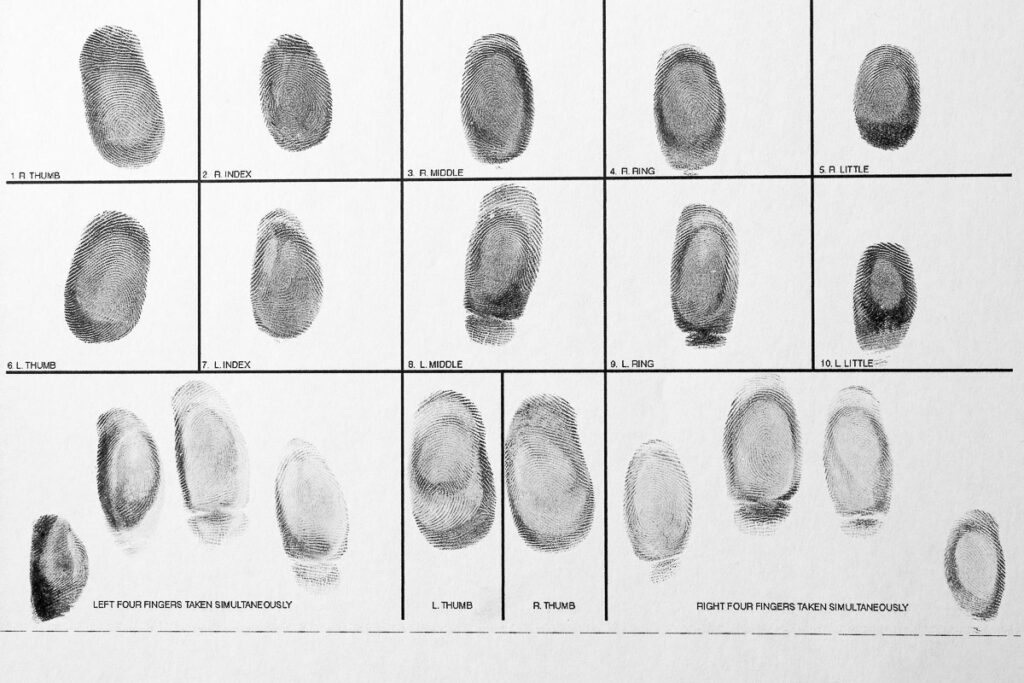
Photo: africa_images, via Pond5
6 Core Elements of Night Court
I’m neither a lawyer nor a legal expert, but based on my observations, I’ve noticed six elements common to every arraignment hearing. These are described below, with their relevant constitutional principles noted.
First Element: Confirmation of Defendant’s Identity
The court confirms that the correct person is present for the hearing. This step is administrative, but it relates to due process, the constitutional principle requiring the government to proceed against the correct person and provide an opportunity to be heard.
Second Element: Defendant Is Informed of Charges
Before someone appears at his/her arraignment, the prosecutor has prepared a written accusation of wrongdoing known as a criminal complaint. At the arraignment, the judge reviews this complaint and formally informs the defendant and his/her attorney of the charges the State of New York is pursuing. The judge also ensures the defendant understands the charges. You’ll hear the charges read out loud.
This element satisfies a provision in the Sixth Amendment to the U.S. Constitution which states the accused person shall “…be informed of the nature and cause of the accusation…”
Third Element: Right To Counsel
The term counsel refers to legal representation. As part of the process, the judge reviews the defendant’s current and future legal counsel. In the U.S., if a defendant cannot afford legal representation, the court will assign a public defender to represent that defendant for the duration of the case. Public defenders are government employees.
As with the second element discussed above, this part of the arraignment addresses a provision in the Sixth Amendment, which states in part, “In all criminal prosecutions, the accused shall enjoy the right…to have the Assistance of Counsel for his defence (sic).”

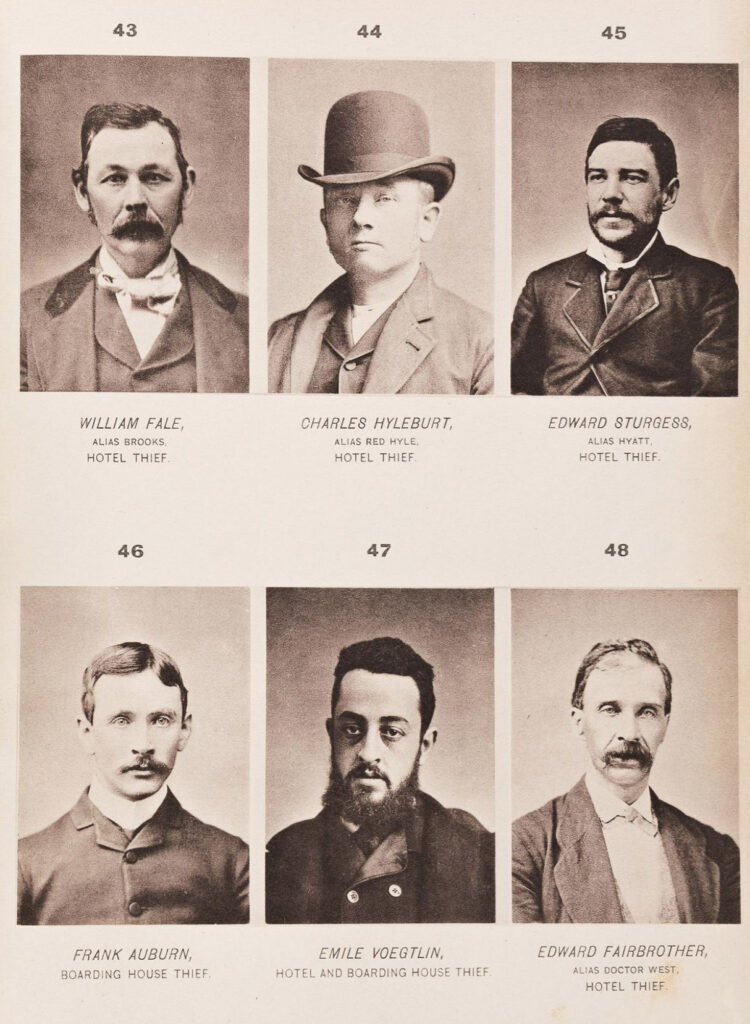
Photo: Jacob Riis, courtesy of Museum of the City of New York
Fourth Element: Plea (guilty/not guilty)
The defendant will then be asked whether they plead guilty or not guilty to the charges.
If someone pleads guilty, the court ensures the guilty plea is being entered knowingly, voluntarily, and intelligently. The court ensures the defendant understands what they forfeit by pleading guilty and the consequences of doing so.
If the defendant pleads not guilty, a few constitutional amendments are triggered in their favor.
These include:
The Fifth Amendment
The Fifth Amendment states in part, “No person…shall be compelled in any criminal case to be a witness against himself…”
By pleading not guilty, the defendant forces the government to prove the charges they’ve presented by convening a trial. The defendant has zero obligation to assist the government with their case. If advised by their attorney, a defendant could even remain silent throughout the entire case without penalty.
The Sixth Amendment
When someone pleads not guilty, they are also preserving a critically important right guaranteed by the Sixth Amendment: the right to a trial. This amendment begins, “In all criminal prosecutions, the accused shall enjoy the right to a speedy and public trial…”
The Sixth Amendment has heavyweight punching-power. In just one short paragraph, it secures for the defendant: a speedy and public trial, an impartial jury, notice of charges, the ability to confront witnesses, compulsory process (i.e., subpoenaing of witnesses), and the assistance of counsel.
The Fourteenth Amendment
Although the Fifth Amendment states, “No person shall be held to answer for a capital, or otherwise infamous crime…without due process of law…,” that dictum only applied to federal courts when that amendment was ratified in 1791. Night court, you may recall, is a state court, not a federal court.
It wasn’t until 1868, when the Fourteenth Amendment was ratified, that the Fifth Amendment’s due process clause was expanded to include state proceedings. Thus, state courts, such as Manhattan’s night court, are obligated to respect a defendant’s right to due process.
Fifth Element: Bail/Conditions of Release
When a defendant is “granted bail” it means the court has agreed to free that person from custody in exchange for their depositing an agreed amount of money or property either with the court or a bail bondsman. The defendant is allowed to remain free throughout the remainder of the case, as long as they follow the conditions set forth by the court.
It is the judge who decides whether a defendant is granted bail. If a defendant is denied bail, whether due to the seriousness of their alleged crime or the risk of their fleeing, he/she must remain in jail until the case is concluded.
At night court, you’ll hear the prosecutor arguing for either the defendant being denied bail or that bail be set at a specific minimum amount. Defense attorneys argue for the opposite.
If bail is being disputed, the defense argues that it should be granted. When bail is granted, the defense attorney will either agree with the amount the prosecutor is requesting or ask that it be lowered.
When a defendant is granted bail, he/she must agree in writing to terms set by the court for their conditional release. A defendant who cannot pay the required bail will remain in jail.
The granting of bail is regulated by the Eighth Amendment, which begins, “Excessive bail shall not be required, nor excessive fines imposed…”
The Eight Amendment does not guarantee a defendant will be given bail. It only protects against excessive bail. Each state creates its own bail laws.
Sixth Element: Scheduling / Continuation of Proceedings
When someone pleads guilty, the next big step is sentencing. Before their sentencing, however, the court evaluates the totality of the crime, including factors relating to both the victim(s) and the perpetrator. Social workers, psychiatrists, doctors, and other government agencies may, for example, provide input. The court will schedule the next phase of the case.
Those who plead not guilty will need to prepare for their speedy and public trial. For simple cases, the judge may schedule the trial there and then or, for more complicated cases, schedule the next step in the process, such as an evidentiary hearing.
Summation
Having a basic understanding of night court’s mechanics will enrich your visit and, hopefully, lead to a deeper appreciation of our nation’s legal system. For foreign visitors, this experience can be especially enlightening, as it allows them to see beyond the surface level of the legal system and encourages them to compare and contrast our system with theirs.
Reading about our rights and privileges in big, dusty books is one thing, but seeing them in action before you is another. From the gallery we are witnesses to a legal process that’s taken centuries to distill into its current form.
This post is hereby adjourned.
NIGHT COURT: QUESTIONS & RESOURCES
Free One-Page Night Court Observer’s Guide
Print our free one-page guide to Manhattan’s night court and take it with you. It summarizes the proceedings.
Where and When Is Night Court?
100 Centre Street at the Manhattan Criminal Courts Building, affectionately known as “100 Centre.”
Monday through Friday, 5:30 p.m. to 1:00 a.m. (midnight), except holidays. In practice, the most activity happens between 6 p.m. and about 12:30 a.m., with a break from about 9 p.m. to 10:15 p.m. or so.
There is a security check, so the lighter you travel, the quicker you’ll get through security.
Fun fact : Up until 2023, there was also a night court session from 1:00 a.m. to 6:00 a.m. NYC was literally serving justice around the clock.
Is Night Court Free?
Yes, night court is always free.
Can I Really Just Walk In?
Yes, you can. You’ll just need to go through security first. Sit anywhere except the front row, which is reserved for court participants.
How Do I Get to Night Court?
Subways:
- 4, 5, or 6 train to: Brooklyn Bridge/City Hall.
- J or Z train to: Chambers St.
- N, R, Q, W, or 6 train to: Canal St.
- 1 train to: Franklin St.
- New York City subway map
Further Reading
- Full text of the first 10 amendments (collective name: the Bill of Rights)
- New York State Criminal Court Information
More From Under A New Sun
- Staten Island Ferry (free NYC activity)
- Matisse & Chagall: Stained Glass Art
- How Foreign Tourists Can Save Money in the U.S.
- Manhattan Walking Tour – Underground & Street Level (video)
Photo Credit
Header photo: New York City skyline, courtesy of mandritoiu / via Pond5
Affiliate Disclosure: This site participates in affiliate programs. This means that if you click certain links and make a purchase, we may earn a commission. This comes at no additional cost to you and helps support the site and future content.
Images used in this article are licensed or used with permission.
© 2026 Under a New Sun. All rights reserved.