
A Song For Every
NYC Bridge & Tunnel
Is there a city better suited to a wide-ranging
driving soundtrack than New York?
Probably not.
Pleasing everyone’s musical tastes is impossible, of course, but this page has a simple premise: New York can never be pinned down to a single musical genre — or even a single language.
Each toll crossing has its own scenery, history, and personality. Add in the weather, traffic, and your own mood, and it becomes clear that the “right” song for a given moment is often a matter of chance.
Whether it’s bridges with skyline views, tunnels, late-night drives, or that distinct feeling of entering or leaving the city, music comes along as an invisible passenger.
Some songs are specifically about New York and are best played on the way in. Most of the selections, however, are more about New York’s tone, its texture, its flavor, its attitude — elusive things that are more difficult to define.
If you discover a song here you didn’t know before and end up really liking it, let us know in the comments. We’d love to hear about it.
P.S. Music also helps numb the pain of paying New York’s tolls.
When Bayonne, New Jersey’s own Robert Tepper sang “There’s no easy way out,” was he singing about NYC? I’m not sure, but if he was, he was right: there is no easy way in or out.
His song became a world famous hit after being featured in Sylvester Stallone’s Rocky IV.
“You got no imagination. Can’t you picture the scene? She’s there at her mother’s house. The mailman comes up with a record and delivers it to her. She opens it up. She rushes over to the phonograph there and plays it. She listens to your tender words pour out. Her heart melts. Two, four, six, eight hours she’s listened to that record. Her eyes fill up with tears, they get all swollen and red. She rushes out of the house to get a bus to come home to you. Her eyes are all swollen up and she misses the bus; she gets on the wrong one. Ends up in Bayonne. That’s the answer, Ralph! You’re sitting here waiting for her to come home, she’s probably wandering around with swollen eyes some place in Bayonne.”—Ed Norton, The Honeymooners
Respect to Robert Tepper
“Rock and roll! Yeah, dude, I think we’re, like, the band.” — The Beastie Boys
Those lines crack me up every time. No matter how many times I’ve heard them.
What else is there to say? Not only the anthem of a borough, but of a city, a time, an attitude, and, of course a bridge. Respect to the Beastie Boys.

Most people don’t associate New York City with surfing. Yet in a city that always has one, two, three million surprises up its sleeve, this is just one more.
Rockaway Beach is New York City’s surfing mecca. If you’ve got a board in NYC and can’t make it to Waimea Bay in Hawaii, Big Sur in California, Nazaré in Portugal, or Bondi Beach in Australia, you take the A train to the end of the line and paddle out there.
Or you can drive out over the Cross Bay Veterans Memorial Bridge.
This isn’t like most NYC bridges. You’re not suspended high above the water—you’re just above it. The air changes. The wind picks up. You swear you can feel salt on your face. The ocean’s scent welcomes you as you cross Jamaica Bay’s windswept South Channel. The noisy city falls away behind you, and the ocean’s tides pull you toward them.
Joey Ramone didn’t grow up in Rockaway, but he wasn’t far—just north, in Forest Hills, Queens. Close enough for the beach vibes to seep in. Rockaway Beach is not California’s surf music. It’s too New York for that—grungier, faster, punkier, saltier, with no patience for polish.
Respect to the Ramones
Patti Smith has long had a “bare” foothold out here. Once upon a time, she was a staple of New York’s punk scene. Now, after years in the Rockaways, she’s part of a different scene. A scene with beaches, sand, and seagulls. The wind, the weather, the general atmosphere—all of it suits her work: elemental, stripped down, a little haunted.
“Dancing Barefoot” isn’t surf music in the California sense, but it suits the Cross Bay Veterans Memorial Bridge. Windows cracked, the bay opening up around you, the air turning sharper, more alive. The song doesn’t rush. It builds. It drifts. It lingers in that liminal space between land and water, just above the waves.
This selection is not about waves; it’s about atmosphere. A kind of charged stillness most New Yorkers are unfamiliar with.
Respect to Patti Smith

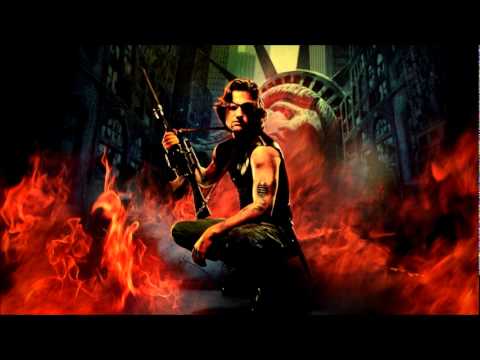
This tune is from the Escape from New York movie soundtrack. Its beat lives down deep in the city’s warm, steamy guts, three or four levels below street level. There, in a dark, dingy chamber, inside a wooden box, it sits coiled, waiting for its next new listener.
It delivers the feeling that either something very good or very bad is about to happen. Everyone in New York is familiar with that feeling: first-time visitors, repeat visitors, decades-long, and lifelong residents. Maybe a better way to describe it is: something potentially interesting is always about to happen in New York.
The movie’s chief villain goes by The Duke, and he’s a bad, bad man. You don’t want to get on his wrong side. This is the song that plays when we see him for the first time. People scurry when they see him coming, in his roofless Cadillac, with giant chandeliers on either side of the hood.
Near the end of the film, the movie’s hero, Snake Plissken, frantically escapes from Manhattan by first driving, then running across the 59th Street Bridge. Most people still call it by that name, but its official “government” name is the Ed Koch Queensboro Bridge.
Respect to Kurt Russell (Snake Plissken), Isaac Hayes (The Duke), Ox Baker, and John Carpenter
Favorite movie set in New York but not filmed there? Escape from New York, of course. It imagines a future New York that’s half wasteland, half war zone, where Manhattan has been turned into an open-air prison with no guards. The prisoners can do anything they want, except leave Manhattan.
When Snake Plissken walks into a crumbling theater in the middle of the night, he finds prisoners performing this number in vaudeville style for a rough crowd of fellow convicts. The song mentions “No more Yankees” and “There’s no more opera at the Met.“
Thankfully, both the Yankees and the Metropolitan Opera House are still around. In fact, when you cross the George Washington Bridge into NYC, Yankee Stadium is just a few blocks away. You are a Yankees fan, right? Good, just checking!
Respect to the singers

It’s very simple. You go to Paris, you take a picture in front of the Eiffel Tower. You go to Bora Bora, you swim in the ocean. You go to Japan, you visit the temples.
You drive into Staten Island (a.k.a. Shaolin), you play Wu-Tang Clan out of respect.
Or, as Sal Tessio said in The Godfather, “for old time’s sake.”

Clear days are the best for crossing the Henry Hudson Bridge, aren’t they? Spuyten Duyvil Creek on your left, the Hudson River on your right. From the bridge, everything looks tranquil — scenic, inviting, almost calm.
Across the river are the majestic Palisades: ancient, rough brown cliffs formed during Ice Ages long before New York City’s street grid was even a twinkle in anyone’s eye.
Heading north leads to a series of repetitious, tree-lined curves on the Saw Mill River Parkway. The opposite direction, however, takes you straight to Fun City, where all is normal one moment and pandemonium the next.
You coast down a gentle grade that connects the Henry Hudson Bridge and the Henry Hudson Parkway. The river is on your right, and there’s just the right amount of sun and wind on your skin. Soon the George Washington Bridge appears, rising in the distance like the man-made mountain it is. After passing the GWB, there are just a few more curves separating you from that long, straight shot toward downtown.
Heading down the straightaway, the eternal New York questions appear in your mind:
Will I be safe today?
Will there be danger?
Then you remember: Brian Johnson said he feels safe here.
That’s good enough for me. Respect to AC/DC.

Frank Sinatra was 11 years old on November 13, 1927. At the time, he lived at 415 Monroe Street in Hoboken, New Jersey. The Hudson River waterfront was 11 blocks east of his front door, and he likely walked there often with friends, toward what is now Sinatra Park. Besides watching boys their age dive off wooden pilings into the river, they would have seen boats, ships, ferries, fishing dinghies, and all manner of maritime traffic navigating the Hudson.
Across the river, their backdrop was Manhattan’s western skyline. Neither the Empire State Building nor the World Trade Center existed yet, but the New York skyline was already world famous. It must have inspired a sense of wonder in young Frank about life in and around those buildings, just as it did for the many immigrants arriving at nearby Ellis Island.
November 13, 1927 was the day the Holland Tunnel opened for business. Interestingly, 415 Monroe Street was not only 11 blocks west of the river, but also 11 blocks north of the tunnel’s New Jersey entrance. It’s not hard to imagine young Frank and his friends going to watch Ford Model T’s, Model A’s, Dodge Brothers touring sedans, Chrysler 60 Series cars, and other early automobiles stream in and out of New York and New Jersey’s first vehicular tunnel.
Less than a decade later, when Mr. Sinatra began his musical career, he would have been a regular paying customer of the Holland Tunnel. How many times he passed through it is hard to say, but we’re glad he did. Perhaps it was during one of those trips through the tunnel to New York that he came to a realization: “If I can make it there, I’ll make it anywhere.“
This song is a classic for a reason. The sound, the voice, the style — all New York.
Respect to Mr. Sinatra

I mean…could you technically listen to this song during the daytime? Sure.
Should you? No. It’s custom made for late night drives through the Hugh L. Carey Tunnel, either going toward Downtown Manhattan’s light-filled towers or toward the new Promise Land: Brooklyn.
After midnight (never before), mix one part gas pedal, two parts music volume, and let the song do its thing. Oh, and roll the windows down (yes, even if it’s hot). The song’s sound waves bouncing off the Hugh L. Carey tunnel’s walls mixing with the sounds of motors at work and wheels whizzing on asphalt is a New York soundscape like no other.
Respect to Boy Harsher

Ohhhhhhhhhhhhhh! Any guesses as to which TV show inspired this one? And don’t give me those Manson lamps for going with the obvious choice. Whether you’re an interior decorator who’s killed 16 Czechoslovakians or the Shah of Iran, everyone knows it’s The Sopranos. By the way, you do know Quasimodo predicted all this, right?
This is now the Lincoln Tunnel’s de facto theme song. It works when traveling in either direction, but if you have to go with one, play it heading into New Jersey. We diehards play it in both directions. Whether you smoke a cigar while going through the tunnel is up to you, but this was the clear winner. “END OF STORY!!” — Tony, finger pointed toward the sky.
Respect to Tony and Alabama 3

Shortly after exiting the Lincoln Tunnel in New Jersey and continuing west on Route 495, you’ll drive past a series of overpasses. Hanging from one of these is an old, rusted sign that proudly proclaims: Union City — Embroidery Capital of the United States.
Few realize that the old, forgotten sign is an open time portal to an earlier version of the USA. At one time, that strip of New Jersey on the Hudson River, directly across from Manhattan’s west side, was dotted with factories. Shoe factories, car factories, clothing factories, furniture factories, embroidery factories. Factories, factories, factories. American industry was at its peak, all pistons firing, all guns a’blazin’, all hands on deck.
In the late 1950s, a small group of Cubans in Florida heard there were factory jobs up north, in cold “New Yersey.” They got factory jobs there and told their brothers and sisters, who told their friends, who told their cousins, who told their aunts and uncles, who told…
Pretty soon mambo and cha-cha-cha were blaring from speakers throughout North Bergen, Union City, Weehawken, Jersey City, and West New York. By the 1970s, the area was known as “Havana on the Hudson.” A sort of miniature, frozen snow globe version of Cuba.
Although she never worked in the factories, Celia Cruz was among the many Cubans who settled in North Jersey. Her story was a bit different, though. She was already a superstar in Cuba when she arrived in the Big Apple, eventually landing a bit farther north in tonier Fort Lee, New Jersey, where she lived for decades. This song would have been a good fit for crossing the Lincoln Tunnel into that part of New Jersey, but Tony Soprano took the top spot. So what did I do? I compromised.
Respect to Celia Cruz
“20 years in the can. I wanted manigot. I compromised. I ate grilled cheese off the radiator instead.” — Phil Leotardo, The Sopranos

The place we call New York City today has had many names. Some were official names, others nicknames, some were positive, some were negative.
Pick one: Manahátaan, Nouvelle Angoulême, New Orange, Nieuw Amsterdam, Fort Amsterdam, Eyland Manatus, Novum Eboracum, The Big Apple, The Empire City, Fear City, Fun City, Gotham City, The City That Never Sleeps, The City So Nice They Named It Twice.
Of these, my favorite is Novum Eboracum. Not only does it sound cool, it also calls back to York, England, the city’s original namesake.
Two thousand years ago in northeastern England there was an abundance of a handsome species of tree that the Britons called Eburākon (now known as yew trees). Later, in 71 A.D., the Romans arrived, took over, and established a province called Britannia Inferior.
Needing a capital for their new province, they started chopping down the stately Eburākon trees. When the time came to name the new capital city, they chose Eboracum, a slightly more Latin-sounding version of the tree’s name. While it’s conceivable that they were just too tired from having cut down the yew trees to think of a more original name, I suspect something simpler: they thought Eburākon sounded cool as well.
Fast forward a few centuries: the Anglo-Saxons are the new sheriffs in town. The city, now called Eoforwic, eventually became Jórvík. Like all names throughout history, this one got stretched, rolled, chiseled, hammered, battered, bruised, and mutilated through the centuries. Tongues tossed it around, smoothing it like waves do with driftwood. Then, just after sunrise one day, our modern version washed ashore: York.
Eventually, when the British took over a small, busy New World port settlement from the Dutch, they renamed it New York. Heck, even the City of New York thinks the old name sounds cool. It appears in the phrase Sigillum Civitatis Novi Eboraci (“Seal of the City of New York”), found on both the city’s official seal and its flag. Novi Eboraci means “of New York,” while Novum Eboracum refers to the place itself.
Whatever it’s been called, whatever it will be called, whatever you like calling it, there’s only one:
Novum Eboracum, Novum Eboracum: The City So Nice They Named It Twice.
Driver’s choice with this song. Starting in Brooklyn, you get incomparable Manhattan views. In the opposite direction, you get the impressive colonnade-lined archway that bids you farewell.
Enjoy Alicia Keys’ soft voice singing about a city that’s been called many things—but soft is not one of them.
Respect to Alicia Keys
“Warriors, come out to plaaaaay. Waaarrrriiiiors, cooooome ouuuuut to plaaaaayyy—eeeeee—ayyyyyy.” — Luther, The Warriors
The moment you cross the Marine Parkway–Gil Hodges Memorial Bridge, you arrive at Fort Tilden Beach in Queens, out in the Breezy Point section of the Rockaway Peninsula, diagonally across Jamaica Bay from JFK Airport. That beach has been Warriors turf ever since the final scene of The Warriors was filmed there.
Talk about a New York classic. While attending a conclave in the Bronx the night before, the Warriors are accused of something they didn’t do by the psychotic Luther. As a result, every gang in New York is out to waste them.
They spend the rest of the night trying to cross the city to get back home. The only problem is everyone wants a piece of them: the Rogues, the Turnbull AC’s, the Orphans, the Baseball Furies, the Lizzies, the Punks, the Hi-Hats, the Electric Eliminators, the Boppers, and the Gramercy Riffs.
After fighting and evading half the gangs in the city, they finally make it home at dawn. One last showdown with Luther, and the Warriors are safe. Respect to The Warriors for making it back home.
“Can you dig it?” — Cyrus, The Warriors

The Outerbridge Crossing might also be called the Outerbridge Crossroads. It’s where New York City meets everywhere else. You might feel slightly disoriented after crossing from Perth Amboy, New Jersey into Staten Island’s Charleston neighborhood.
Is this really NYC? Why does it look almost suburban? Why are the buildings so short? Why are there those green things called trees? And why does it kind-of-sort-of-maybe remind me of Portsmouth, New Hampshire, or some other coastal New England town?
After the initial disorientation, you look right and ahhhhhhhhh…would you look at that. There they are — the Verrazzano Bridge’s pylons shooting into the sky. You can see them clear across Staten Island. You look left and woooow, that’s cool — the most distant view of Manhattan’s skyline the city has to offer.
I get it. This is New York. It’s just the quietest, softest landing into the city.
It’s the secret backstage door to the Gotham Theater, if you will.
The Outerbridge Crossing is both New York City’s and New York State’s southernmost bridge. Although its name sounds custom-made for its geography, it was actually named, by coincidence, for Staten Island resident and first chairman of the Port Authority of New York, Eugenius Harvey Outerbridge. The term “Crossing” was chosen, understandably, to avoid having everyone sound like Jimmy Two Times by calling it the “Outerbridge Bridge.”
This selection works well in both directions. When entering New York, there can be a sadness in leaving an old life behind, while starting a new, more optimistic one. When leaving NYC, it may inspire feelings of leaving a place you love or realizing the vivid memories you created on its streets are already being trampled by millions, ground underfoot into a fine powder that melds with the pavement, then washed into a gutter by the next rain.
Respect to M83
“And then there was Jimmy Two Times, who got that nickname because he said everything twice.” — Henry Hill, Goodfellas
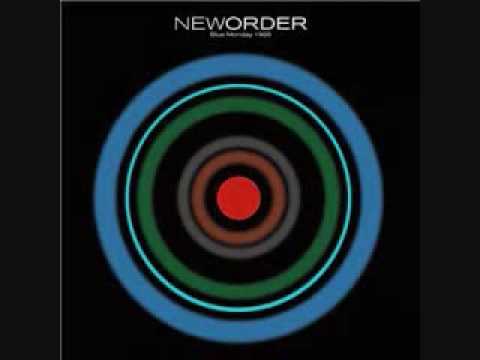
Those drums sound great in the tunnel, don’t they? Even the artwork looks like a tunnel. If traffic’s flowing, it’ll get you through the whole tunnel and then some. When heading east, it allows for a seamless segue to the Long Island Expressway.
Respect to New Order
It’s officially been called the Robert F. Kennedy Bridge since 2008, but to millions it’ll always be known by its former name: The Triboro.
This is the only NYC crossing which connects three boroughs: the Bronx, Manhattan, and Queens. In a sense, you could say it’s the bridge that brings the most people together. Weather permitting, the views are always great. Song wise, it’s a dealer’s choice.
Please be aware, however, that New York State law requires anyone crossing the RFK Bridge into Queens to play at least one song by Anthony Dominick Benedetto, known to you and I as Tony Bennett. It’s not only a matter of respect, but as the British say, the only civilized thing to do (as it were). As you descend the RFK Bridge’s southern slope into Queens, you’ll land in the Astoria neighborhood, where Mr. Benedetto grew up.
During the daytime, go with Rags to Riches. At night, though, when Manhattan’s skyscrapers sparkle like grand champagne glasses, reach over, squeeze her hand, and play I Wanna Be Around. A true New York experience. (Thank me later.)
Respect to Tony Bennett

What do Lady Miss Kier, Supa DJ Dmitry, and DJ Towa Tei have in common? Besides being Dee-Lite, they all love New York City. Sure, they’re known for the more popular Groove Is in the Heart, but their love for NYC led this American–Ukrainian–Japanese trio to create this speaker thumper. It’s short, but so is the RFK Bridge’s Manhattan artery.
Respect to Dee-Lite

Picture it. It’s December and freezing outside. The air is dense. So dense your breath and any aroma stay suspended around you. Some Puerto Rican friends have invited you to a house party. You ring the bell. The door opens and — whoooooosh — the hot air inside the house rushes out to warmly greet the dense-as-a-brick-wall freezing air.
Arroz con gandules, mofongo, yuca with garlic, and lechón combine into one aroma that fills your nose, fills your head, fills your heart. This song, Eso Se Baila Así, plays loudly in the background. You say to yourself… this… this is New York.
The RFK Bridge’s Bronx artery runs into and out of the South Bronx, where Willie Colón was born and raised. Mr. Colón wrote and sang Eso Se Baila Así with Héctor Lavoe. Just one of many classics he penned. As you cross the RFK Bridge into “El Brone,” throw this one on — out of respect to Mr. Colón.
Eso Se Baila Así = This is how you dance it (or This is how you dance that one)

Enyi m, enwere m olileanya na ọ masịrị gị.
NYC = stress, but a lot of people crossing the Throgs Neck Bridge southbound are on their way to relax. Some are going to JFK Airport, about to start vacations or return home to loved ones. Some are about to fry like human-sized sausages in the sun at Jones Beach. Tons are escaping to the Hamptons or going to pay homage to the grape out on Long Island’s wine trails. And many are simply returning home to Queens or Long Island after a long day of work.
Whatever your destination, this funky Nigerian number will start the relaxation process. On warm days, you’ll love the bridge’s wide views, the refreshing gusts of wind lifting cool air from below, and the faint but unmistakable scent of salt air, while the song’s notes flutter around your car like small, happy, rhythmic birds.
It works just as well heading north toward the Bronx, whether you need to relax after a long flight, are coming back from the beach, or are on your way to work somewhere.
Enyi m, enwere m olileanya na ọ masịrị gị.
That means “I hope you like it, my friend” in Igbo, one of Nigeria’s major languages — and one of the hundreds of languages you’ll hear on NYC’s streets.
Respect to The Funkees

Well, you can tell by the way I drive, I’m a woman’s man, no time to….
Oh! Didn’t see you there.
I know, I know…I know. I tried to avoid it.
This playlist has (mostly) been about avoiding the most obvious of the obvious. But this song was essentially the only candidate. At this point, Stayin’ Alive has fused at the sub-atomic level with the Verrazzano’s steel. The song is not about this bridge, but this bridge is about this song. Half a century and still going strong. Now go throw on some cologne, will ya?
Respect to the Bee Gees

Heading north toward the Bronx, this one will get you started on the Hutchison River Parkway. Crossing south to Queens you’ll bounce along to it until you have to bang a right toward LaGuardia Airport or bang a left onto the Cross Island Parkway.
I’m sure the water sound effects will add to the atmosphere on rainy days. A cool descendant of Riders on the Storm. I think Jim Morrison would approve.
Respect to The Doors and the unknown artist
The Williamsburg Bridge’s semi-sharp drop into Manhattan leaves you at street level almost as soon as you cross it. Plop. Just drops you onto Delancey Street and into all that… all that…reality.
A New York minute ago you were enjoying some of the city’s best views. And now? You’re back in the grit. You see them, but they don’t see you: the guy yelling at invisible accusers, the cool kids in leather-sleeved denim jackets with foreign patches, the woman selling fruit drinks from a cart, the cyclist with a bad attitude, the two shirtless guys about to fight, each with a dilapidated loosie in one hand and a brown paper bag-covered beer in the other.
All of it — the movement, the aggression, the noise, the randomness, the humanity — forms a tidal wave that can submerge the senses. Sometimes you need a breaker wall to blunt the wave’s impact. You realize…it’s easy. Just slow down a bit.
Respect to Jonathan Bree


Part of the NYC Bridge & Tunnel Toll Guide — current 2026 rates for every crossing